RC-8436935
Trusted Health Solutions + Smart Pharmacy Business Guidance contact: +2347088767048

High Blood Pressure in Young Adults: Silent Signs, Causes & Natural Ways to Lower It (Nigeria Guide)
High blood pressure is no longer an “old people’s disease.” Many young adults are silently living with dangerously high BP without knowing it — until stroke, heart failure, or kidney problems appear. Frequent headaches? Dizziness? Stress? Too much salt? Poor sleep? Your body may already be giving warning signs. In this guide, learn: •Silent signs of high blood pressure • Foods increasing your BP • How stress affects your heart • Natural ways to lower blood pressure • How much salt is too much in Nigeria • When high blood pressure becomes dangerous Don’t wait for symptoms before taking your health seriously. Read now!
Seekhealth Pharmacy
5/10/20263 min read
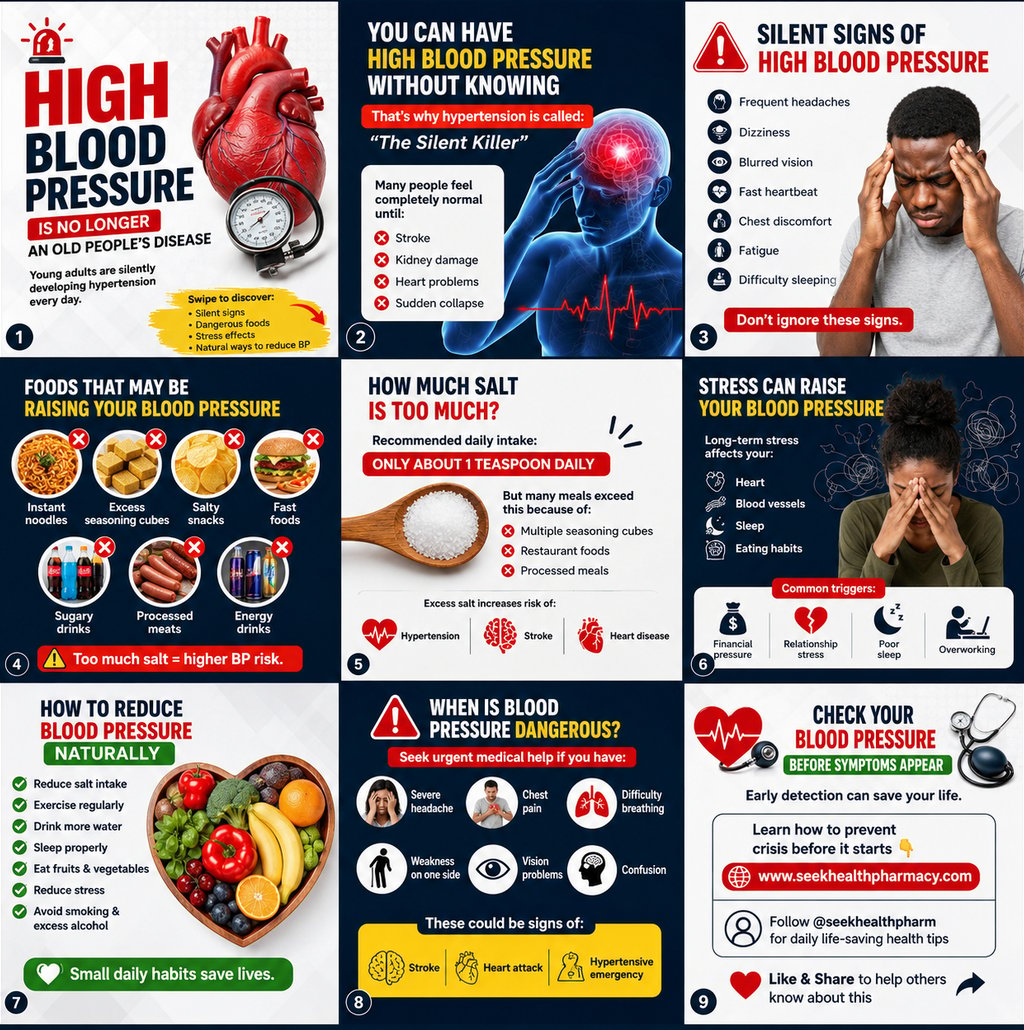
Many people believe high blood pressure only affects older adults. That is no longer true. Today, more young adults in Nigeria are developing high blood pressure because of stress, unhealthy diet, lack of exercise, poor sleep, alcohol, smoking, obesity, and excessive salt intake. High blood pressure (also called hypertension) happens when the force of blood pushing against your arteries becomes too high for too long.
What Causes High Blood Pressure in Young Adults?
Common causes include:
✓ Too much salt in meals
✓ Frequent consumption of processed foods
✓ Lack of physical activity
✓ Stress and anxiety
✓ Excess alcohol intake
✓ Smoking
✓ Obesity
✓ Family history
✓ Kidney disease
✓ Poor sleep
Young adults who constantly eat fast foods, instant noodles, shawarma, fried snacks, and sugary drinks may increase their risk without realizing it.
Another major problem is that many people feel “fine” while their blood pressure is dangerously high. That is why hypertension is called a silent killer.
Silent Signs of High Blood Pressure
Most people with high blood pressure do not notice symptoms early.
However, your body may still give warning signs.
Watch out for:
✓ Frequent headaches
✓ Dizziness
✓ Blurred vision
✓ Chest discomfort
✓ Fast heartbeat
✓ Shortness of breath
✓ Fatigue
✓ Nosebleeds
✓ Difficulty sleeping
Some people only discover they have hypertension after developing stroke, heart disease, or kidney problems.
Do not wait until complications appear before checking your blood pressure.
Adults should check their blood pressure regularly — even if they feel healthy.
How to Reduce Blood Pressure Naturally
You can lower blood pressure naturally by changing daily habits.
Small consistent changes often produce major results.
1. Reduce Salt Intake
Too much salt makes the body retain water, increasing blood pressure.
Avoid adding excessive seasoning cubes and table salt to food.
2. Exercise Regularly
Walking, jogging, dancing, and cycling help improve heart health.
Aim for at least 30 minutes daily.
3. Eat More Fruits and Vegetables
Foods rich in potassium help balance sodium levels in the body.
Good options include:
● Banana
● Orange
● Watermelon
● Spinach
● Tomatoes
● Avocado
4. Reduce Stress
Long-term stress can contribute to hypertension.
Practice:
● Rest
● Deep breathing
● Prayer or meditation
● Proper sleep
● Taking breaks from work
5. Maintain Healthy Weight
Excess body weight increases pressure on the heart and blood vessels.
Even small weight loss can help lower blood pressure.
6. Avoid Smoking and Excess Alcohol
Smoking damages blood vessels while alcohol can raise blood pressure significantly over time.
Foods That Increase Blood Pressure
Certain foods can silently raise blood pressure when consumed frequently.
Limit these foods:
● Instant noodles
● Processed meats
● Fried fast foods
● Excess seasoning cubes
● Salty snacks
● Sugary drinks
● Energy drinks
● Canned foods
● Excess red meat
● Alcohol
Many Nigerians consume high-salt foods daily without realizing the long-term danger.
Reading food labels and reducing processed food intake can help protect your heart.
Stress and Blood Pressure: What You Must Know
Stress does not only affect the mind. It also affects the heart and blood vessels.
When stressed, the body releases hormones that temporarily raise blood pressure.
Chronic stress may lead to:
● Persistent hypertension
● Emotional eating
● Poor sleep
● Increased alcohol intake
● Weight gain
Common stress triggers include:
● Financial pressure
● Relationship problems
● Work stress
● Lack of sleep
● Health worries
Managing stress properly is important for blood pressure control.
Simple habits like exercise, sleep, relaxation, and reducing overthinking can help greatly.
How Much Salt Is Too Much? (Nigeria Guide)
Many people consume more salt than they realize.
The recommended daily salt intake for adults is about 5g of salt per day. That is approximately one teaspoon.
However, many Nigerian meals exceed this amount because of:
✓ Multiple seasoning cubes
✓ Salted meats
✓ Processed foods
✓ Instant noodles
✓ Restaurant meals
Excess salt increases the risk of:
✓ High blood pressure
✓ Stroke
✓ Kidney disease
✓ Heart disease
Tips to reduce salt:
✓ Taste food before adding salt
✓ Reduce seasoning cubes gradually
✓ Cook more fresh meals
✓ Drink more water
✓ Avoid overly processed foods
When Is Blood Pressure Dangerous?
Normal blood pressure is generally around: 120/80 mmHg
Blood pressure becomes dangerous when it remains consistently high, especially above: 140/90 mmHg
Seek urgent medical care immediately if high blood pressure is associated with:
✓ Severe headache
✓ Chest pain
✓ Difficulty breathing
✓ Weakness on one side
✓ Confusion
✓ Vision loss
✓ Seizures
Extremely high blood pressure can lead to:
✓ Stroke
✓ Heart attack
✓ Kidney failure
✓ Sudden death Early detection saves lives.
Checking your blood pressure regularly may help prevent serious complications before they happen. You may also read 10 Effective Strategies to Manage Your Hypertension
Summary
High blood pressure is becoming increasingly common among young adults. The dangerous part is that many people do not know they have it until complications develop. Healthy eating, reduced salt intake, exercise, stress control, and regular blood pressure checks can help protect your heart and prevent long-term damage. Protect your heart before symptoms appear!