RC-8436935
Trusted Health Solutions + Smart Pharmacy Business Guidance contact: +2347088767048

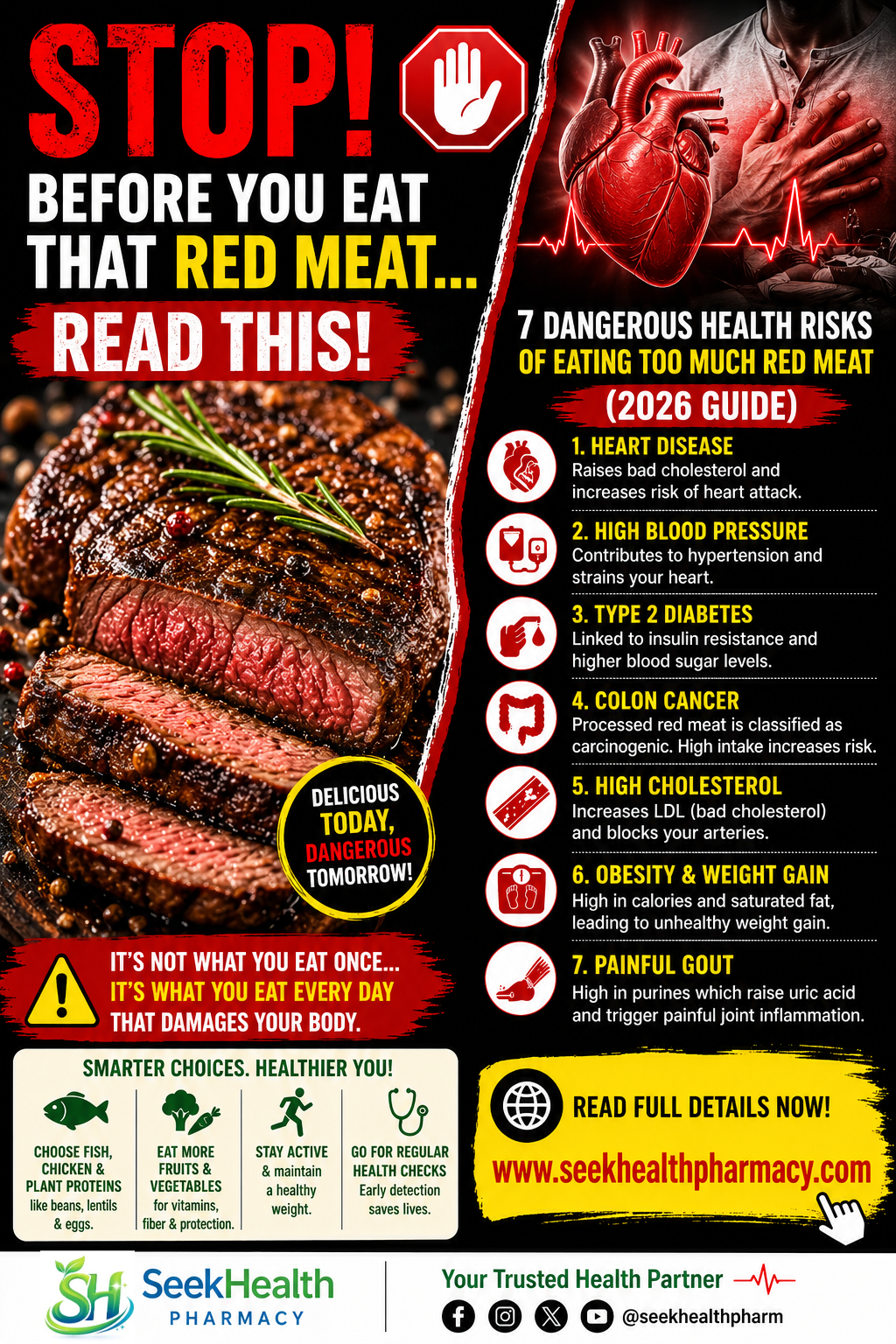
7 Dangerous Health Risks of Eating Too Much Red Meat (2026 Guide)
Is Red Meat Bad for You? Discover the hidden dangers of red meat, including heart disease, diabetes, and cancer risk. Learn safer, healthier alternatives today.
Seekhealth Pharmacy
5/1/20262 min read
Overconsumption of red meat—especially processed types (like sausages, bacon, suya with heavy fat, etc.)—has been linked to several medical conditions. It’s not about fear, but awareness and balance.
Here are the major health risks backed by research:
1. Cardiovascular Diseases
High intake of red meat (rich in saturated fats and cholesterol) is associated with:
✓ Heart disease
✓ High blood pressure
✓ Stroke It can raise “bad” cholesterol and damage blood vessels over time.
2. Type 2 Diabetes
Frequent consumption—especially processed meat—has been linked to increased insulin resistance. This makes it harder for the body to control blood sugar levels.
3. Colorectal Cancer
This is one of the strongest associations. The World Health Organization classifies processed meat as carcinogenic. Red meat is considered “probably carcinogenic” when consumed in excess. Compounds formed during cooking (especially grilling or burning) may increase cancer risk.
4. Obesity & Weight Gain
Red meat is calorie-dense, especially fatty cuts.
Over time, excess intake can contribute to weight gain and metabolic imbalance.
5. Hypertension
Linked to high sodium in processed meats and overall dietary patterns.
6. Hypercholesterolemia
Too much saturated fat can increase LDL (bad cholesterol), leading to plaque buildup in arteries.
7. Gout
Red meat is high in purines, which can increase uric acid levels. This can trigger painful joint inflammation.
8. Cognitive Decline (Emerging Evidence)
Some studies suggest diets high in processed/red meat may be linked to:
✓ Memory issues
✓ Increased risk of neurodegenerative conditions (Still being studied, but worth noting)
9. Gut Health
Issues Low fiber + high red meat intake can disrupt gut bacteria balance. This may contribute to inflammation and digestive problems.
The Key Truth:
Red meat itself is not the enemy. The problem is:
● Too much
● Too often
● Highly processed forms
Smarter Approach
Limit portions (2–3 times per week)
Choose healthier alternatives:
✓ Fish & Seafood Rich in protein and heart-friendly fats. Examples: salmon, mackerel (titus), sardines, catfish, prawns
Great for: reducing inflammation and supporting heart health
✓ White Meat (Lean Poultry)
Lower in saturated fat than red meat. Examples: chicken, turkey
Tip: go for grilled, boiled, or baked instead of fried
✓ Eggs
Affordable, high-quality protein with essential nutrients.
Perfect for quick meals and breakfast options
✓ Plant-Based Proteins
Very important—and often underrated. Examples: beans, lentils, chickpeas, soybeans
In Nigeria: moi-moi, akara, beans porridge are excellent choices
✓ Dairy Products Provide protein plus calcium.
Examples: milk, yogurt, cheese Go for low-fat options when possible
✓ Soy Products One of the best meat substitutes nutritionally.
Examples: tofu, soy milk, textured vegetable protein (TVP). High in protein and very versatile
✓ Nuts & Seeds
Good for light protein plus healthy fats.
Examples: groundnuts (peanuts), almonds, pumpkin seeds
● Best as snacks or meal additions
● Combine with vegetables and fiber-rich foods
Reduce processed meats as much as possible
Though, it’s not what you eat once in a while that affects your health… It’s what you eat consistently without thinking.